Tree Service in Lubbock: Assessments and Care
Half the calls about a tree in Lubbock start with "I don't know what is wrong with it". The first job is working that out, and it is cheaper than guessing.
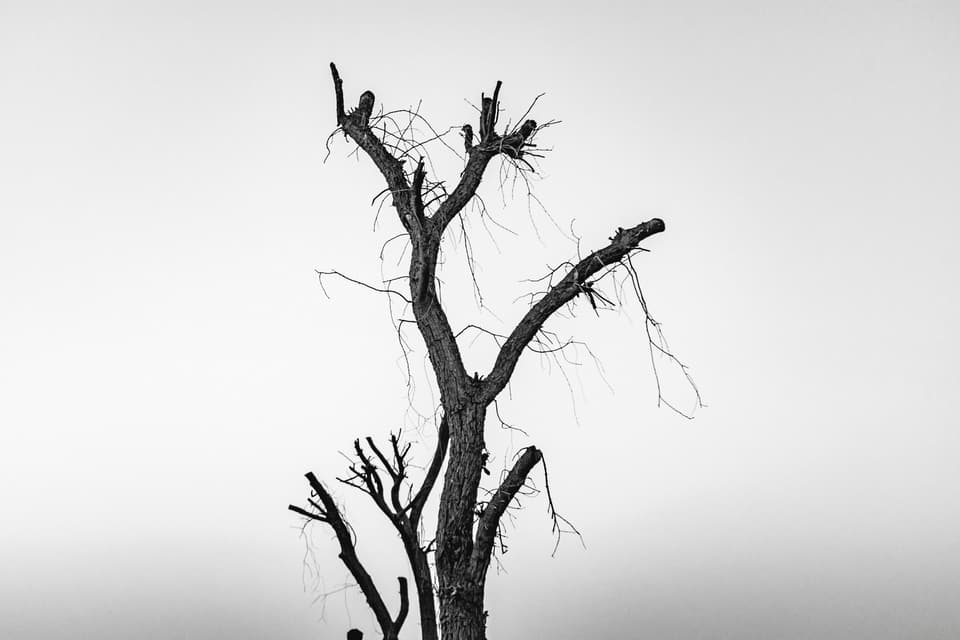
What a tree assessment covers
Someone who works on trees every day walks round it and looks at the things you cannot easily see from the patio: the root flare where the trunk meets the ground, the main unions where big limbs join, the top of the crown, and any old wounds where limbs were cut years ago. They tap the trunk for hollow sections and look for fungus, cracks and bark coming away.
What you should get back is a plain answer to three questions. Is the tree healthy, declining, or dead? Is any part of it likely to fail, and onto what? And what is the cheapest sensible thing to do about it, including doing nothing for now?
The usual Lubbock problems
Drought decline
The commonest cause of a thinning crown here is water, or the lack of it. A lawn sprinkler on an assigned-day schedule wets the top few inches of soil; a mature shade tree wants a slow, deep soak across a wide area out past the edge of the branches. Trees that went through 2011, the driest year on Lubbock's record, on lawn water alone often never fully recovered and are still dying back from the top.
Yellow leaves with green veins
That pattern is usually iron chlorosis. Lubbock's soils are alkaline, often with caliche underneath, and at high pH a tree cannot take up the iron that is there. Pin oaks and some maples suffer most. It is treatable, but the treatment is a chemical application, which in Texas means a licensed applicator if someone is doing it for hire.
Hail and wind injury
A May or June hailstorm can strip leaves and shred bark on the side of the tree facing the storm. Most healthy trees re-leaf the same summer. What needs watching is torn bark on thin-barked trees and the broken stubs left in the crown, which are where decay gets in.
Old topping cuts
Trees that were topped decades ago, cut back to stubs to "make them safer", grew back with a cluster of weakly attached shoots at each cut. Those shoots are now big limbs on a decayed base, and they are a common reason a tree that looks full and healthy drops a limb in a spring wind.
What can be done short of removal
- Deadwood removal: taking out dead limbs before they fall, the most common and cheapest fix
- Weight reduction on a long, heavy limb over a roof, so it carries less load in wind
- Cabling or bracing a weak fork on a tree worth keeping, which supports it without hiding the problem
- Changing how the tree is watered, which costs nothing but usually matters more than anything else
- Treating chlorosis or a specific pest, by a licensed applicator, where it will actually help
None of these makes a dying tree healthy. They make a sound tree safer or a stressed tree more likely to recover. A good assessment tells you honestly which one you have.
When the answer is removal anyway
Sometimes the assessment is a short conversation: the tree is dead, or the trunk is hollow, or the fork over the bedroom has already started to split. In that case the useful thing is a clear removal estimate and a sense of how soon. The removal page covers what that job involves and what should be written into the price.
Not sure what you are looking at? Call for a free estimate and describe it. A local tree company will come and look, and tell you whether it needs pruning, treating, removing or just better water.
Common questions
Is an assessment free?
An estimate for specific work usually is. A formal written risk assessment or arborist report, the kind an insurer, HOA or lawyer might want, is a separate paid service from the companies that offer it. Say which you need when you call.
Can a tree that lost half its leaves this summer recover?
Sometimes. If the twigs are still flexible and green under the bark when you scratch them, the tree is alive and may re-leaf after rain or a deep watering. If the twigs snap dry and brown, those branches are dead. A tree that is dying back from the top over two or three seasons is usually in decline rather than a bad year.
Should I fertilize a struggling tree?
Usually not as a first step. Fertilizer pushes new growth, and a stressed tree short of water cannot support it. Fix the watering first. Yellowing from chlorosis is an iron uptake problem rather than a lack of fertilizer.
Who can spray or inject my tree?
Anyone applying a pesticide to trees for hire in Texas needs a Texas Department of Agriculture applicator licence. Ask to see it before agreeing to a treatment.
More tree work in Lubbock
- Tree Removal in Lubbock, TX
- Tree Trimming and Pruning in Lubbock
- Storm-Damaged Tree Cleanup in Lubbock
- Stump Grinding in Lubbock, TX
Also serving
Tree Service is available beyond Lubbock, across Wolfforth , Slaton , Levelland and Brownfield .
Get an estimate for tree service
Tell us about the tree and a local tree company will come and look at it, usually within a few days, sooner for a limb on a roof. Answered Mon–Sat, 7am–6pm · storm calls after hours get a call back first thing Or call (806) 515-3071. If a limb is on a roof or a line, call rather than typing.